
Race-day gear has one job: support your performance without becoming a distraction.
That means shoes you have already run in. Apparel you know works at pace. Layers that make sense for the weather. Nothing complicated. Nothing experimental.
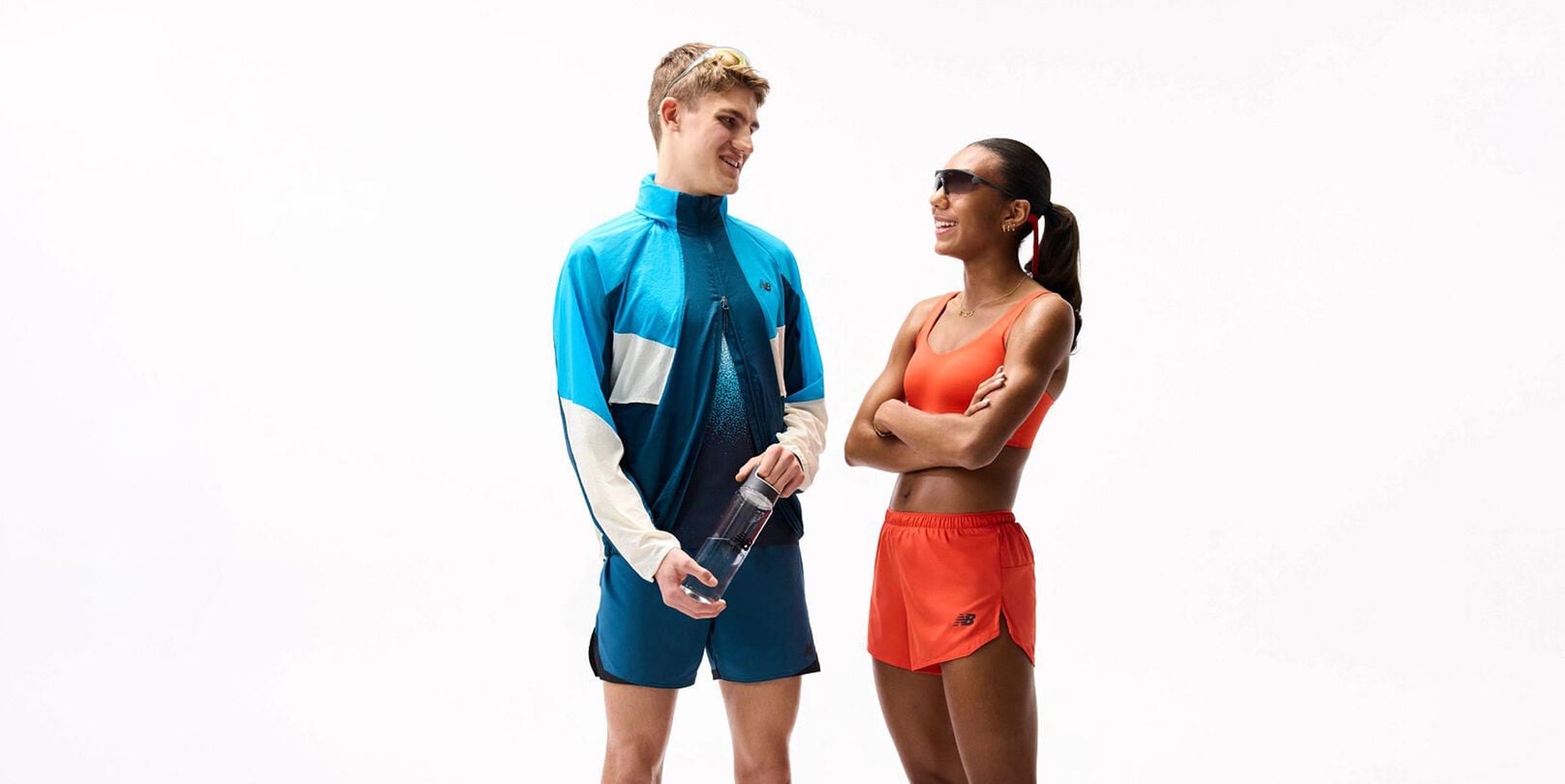
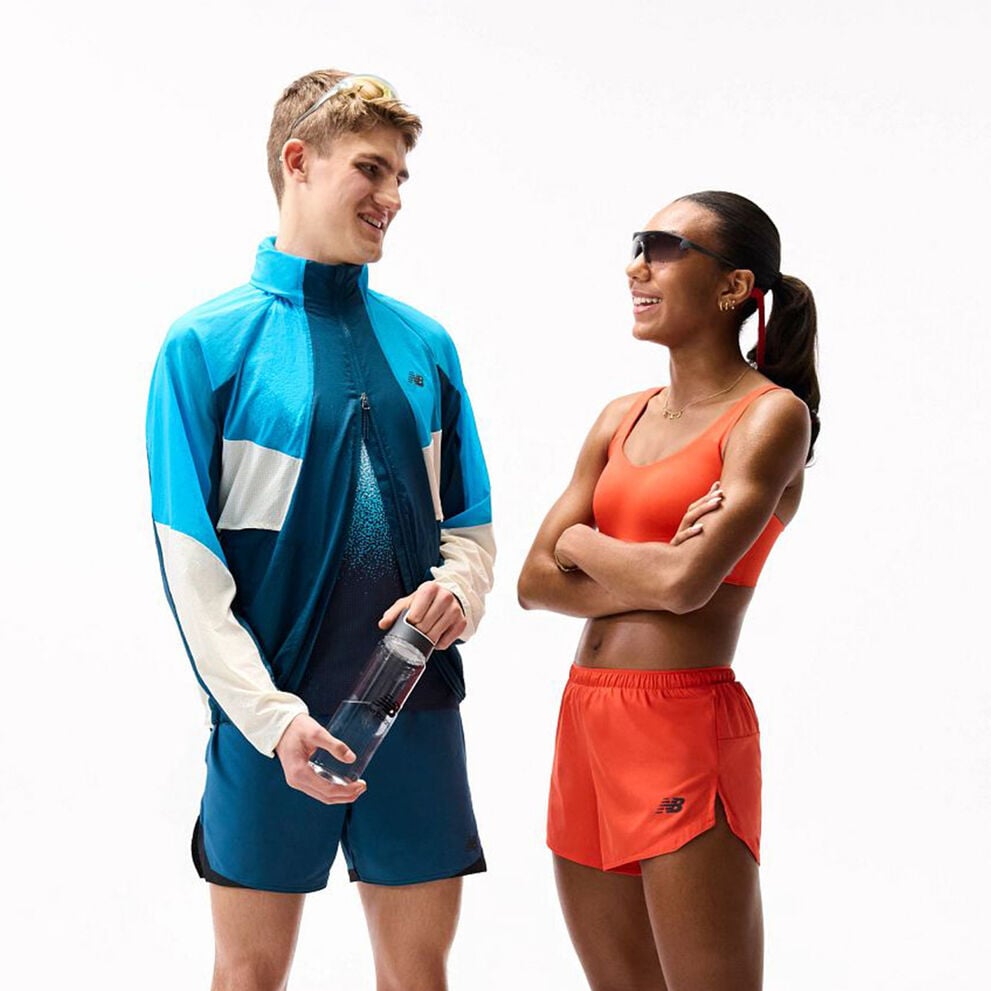
How should I build a race-day kit?
What should I wear for a marathon or half marathon on race day?
Wear gear you have already tested in training and choose each piece for the distance, conditions and effort you expect on race day.
· Race shoes that match your goals and preferred feel
· Shorts or leggings you already know stay comfortable over longer efforts and hold your nutrition without sliding
· A supportive running bra, if needed
· A lightweight outer layer for cold, windy or damp starts
· Socks, accessories and fueling you have already used in training
Your kit should feel familiar before the race starts. That familiarity matters, so when buying race day gear, make sure you leave time to break it in.


What does “nothing new on race day” really mean?
“Nothing new on race day” means your shoes, apparel, fueling and other important choices should already have been tested while running. A shirt that feels fine standing still can feel different after an hour of sweat. A jacket that is perfect at the start can become something you regret carrying later.
Training is where you find those things out. Race day is where you reap the benefits of all of your testing and training. The day it all clicks.
How should I choose race-day running shoes?
Choose race shoes based on how they will support your performance when seconds count. Rather than choosing a shoe based only on race distance, consider the ride and performance features that best match how you want to race.
Some runners want a dedicated racing model. Others prefer a shoe that can move between training and race day.
What is the difference between the SuperComp Elite v6 and SuperComp Rebel?
The biggest difference is specialization. The SC Elite v6 is built specifically for competition and race day, with Infinion foam, an approximate 8 mm heel-to-toe drop and a fine-tuned carbon fiber plate designed to provide a propulsive feeling. Due to variances created during the development and manufacturing processes, all references to drop heights are approximate.
The biggest difference is how each shoe fits into your training and racing. The SC Rebel is built for faster daily training and up-tempo runs, with a propulsive feel that helps support speed-focused sessions. The SC Elite v6 is the more specialized race-day option, with Infinion foam and a fine-tuned carbon fiber plate designed to help create a propulsive feeling ride. The SC Rebel can help you prepare through faster training, while the SC Elite v6 is built to take that performance focus to race day.
If you want a dedicated race shoe, the RC Elite V6 is the more race-specific choice. If you want one shoe to spend more time in faster training while still feeling at home on race day, the SC Rebel leaves more room between workout day and race day.
When does a carbon-plated racing shoe make sense?
If you want the most propulsive feeling on race day, a carbon-plated racing shoe can make sense as a more specialized option for a goal race. The SuperComp Elite v6 uses a carbon fiber plate with Infinion foam and is explicitly positioned by New Balance for race day and competition.
A carbon-plated shoe can be worth considering when you want a more specialized race-day experience. The best choice is one that feels right at your goal pace and complements the way you plan to race.
Can one shoe work for both speed workouts and race day?
Yes. The SC Rebel is designed for faster everyday training, from up-tempo runs to race-focused workouts. Regular training in the shoe can help you learn how it feels at different paces and across longer, harder sessions.
How do the featured New Balance products compare?
| Product | Suited to | Key details |
| SuperComp Elite v6 | Dedicated race-day performance | Infinion foam; carbon fiber plate; 8 mm approx. drop; 198 g/7.0 oz (one shoe, size 7W or 9.5M). Due to variances created during the development and manufacturing processes, all references to drop heights are approximate. |
SuperComp Rebel | Uptempo runs and race-focused training | Infinion foam technology; precision-engineered plate; 4 mm approx. drop; 222 g/7.8 oz (one shoe, size 7W or 9.5M). Due to variances created during the development and manufacturing processes, all references to drop heights are approximate. |
RC Pocket Legging (Women’s) | Cooler-weather runs, high-intensity workouts and layering | NB DRY fast-drying technology that wicks moisture from your body; NB Sleek 4-way stretch fabric; side drop-in pockets; internal infinity drawcord; reflective details at bottom hem |
RC Pocket Tight (Men’s) | Cooler-weather runs, high-intensity workouts and layering | NB DRY fast-drying technology that wicks moisture from your body; NB Sleek 4-way stretch fabric; side drop-in pockets plus back zip pocket; external drawcord; functional ankle zippers; reflective NB logo |
RC Bra | Running and high-bounce activity | Full support; NB DRY fast-drying technology that wicks moisture from your body; built-in padding; channeled cups; adjustable straps |
RC Jacket | Cold starts, wind and light rain | Nylon ripstop; water resistant coating for light-rain resistance; packable hood and packable design |
RC Essential Short | Warm-weather racing and movement | NB DRY fast-drying technology that wicks moisture from your body; perforated 4-way stretch woven shell; mesh internal brief; side split; storage pockets |
What race-day apparel works in changing conditions?
How do I dress for a race that starts cold and warms up?
Use layers you can remove, open or carry once your body warms up. Race mornings create an annoying problem: you may stand around cold before the start, then feel completely different once you begin running.
Avoid building your whole outfit around how you feel in the corral. Dress for the conditions you expect once the race is underway and choose layers you have already tested.
Do I need a jacket at the start line?
A lightweight jacket can be useful when race morning starts cold, windy or damp, especially if it is easy to remove or carry. The current RC Jacket uses a lightweight nylon ripstop body, a water-resistant coating for light rain resistance, a packable hood and a packable design with a hand elastic for carrying.
The key is flexibility. If you expect to take the jacket off after a few miles, know what you are going to do with it before the race starts.
When should I choose leggings instead of shorts?
Choose leggings when cooler conditions or personal comfort make more coverage useful. There is no single temperature that works for every runner; wind, precipitation, race effort and individual preference all change the equation.
What should I look for in race-day shorts?
Look for shorts that stay comfortable at race pace and across the duration of your event. The RC Essential Short uses NB DRY fast-drying technology that wicks moisture from your body, a perforated four-way stretch woven shell, a side split for freedom of movement and a built-in mesh brief. It also includes internal drop-in pockets and an external zippered pocket for small essentials.
The important part is not how minimal the short looks. It is whether you forget you are wearing it.
What sports bra should I wear for a marathon?
Choose a running bra that provides the support you need and that you have already tested during longer or higher-effort runs. The RC Bra is engineered for full support during high-bounce activities such as running. It features NB DRY fast-drying technology that wicks moisture from your body, built-in padding with encapsulation, channeled cup construction, adjustable straps and an adjustable hook-and-eye bottom band.
Bonded, clean-finished seams can help prevent chafing. A marathon is a poor place to discover that a strap shifts after ninety minutes, so test the bra during training and pay attention to what you notice.
How should I test race-day gear before the event?
How long before race day should I test my gear?
Test your full kit early enough that you still have time to change something if it does not work. There is no universal number of days or miles required. The useful benchmark is whether you have worn the important pieces during a meaningful training session and know how they behave over time.
How many miles should I put on race shoes before race day?
There’s no set distance you need to cover when breaking in race shoes. Run in them enough to confirm fit, comfort, and how they feel at the pace you expect to run. The goal is familiarity, not mileage for mileage’s sake.
What training runs should I use to test my full kit?
Use at least one run long enough or fast enough to expose distractions. A longer run can reveal whether fabric, seams or storage become annoying over time. A tempo or race-pace session can show how shoes and apparel feel when your stride and effort change. A cooler or wetter run can tell you whether the jacket you planned to race in is actually a layer you want to carry.
Wear the pieces together. The whole kit can behave differently than each item does on its own.
Why does preparation matter on race day?
Confidence comes partly from knowing you prepared for the parts of race day you could control. You know how your race-day shoes feel at pace, how they respond later in the effort and what to expect from them when it matters most.
Race day still has surprises. It is a race. Your gear does not need to be one of them.
The first-time half-marathoner and the runner chasing a PR may have different goals, but both know what it took to reach the start: early alarms, runs squeezed around work, changing weather and days when the legs absolutely did not cooperate. On race day, that shared effort connects everyone on the course.
Race the race, not your gear.
You have enough to think about on race morning: the pace, the weather, the first mile everyone promises they will not run too fast and the moment late in the race when the work gets very real.
Your gear should not need its own storyline.
Choose shoes you have tested. Wear apparel that stays out of the way. Build layers around the conditions you expect, not just the temperature in the corral.
Then trust what you already know.
The race is the new part. Your kit should not be.
