
Starting to run sounds simple enough. Put your shoes on. Head outside. Run.
Then you actually do it.
Your breathing feels harder than expected. Your legs have opinions. Suddenly you have questions: How long should I run? Is it okay to walk? Do I need different shoes? What do I wear when it is cold?
The good news is that you don't need to figure everything out on day one.
A better way to start is to make running manageable enough to come back to. That may mean alternating running and walking, keeping sessions short and giving yourself permission to be new.
There is no test you have to pass to prove you're a runner. If you run, you're a runner.
Disclaimer: Always consult your doctor before beginning a new exercise routine.
What do I need to start running as a beginner?
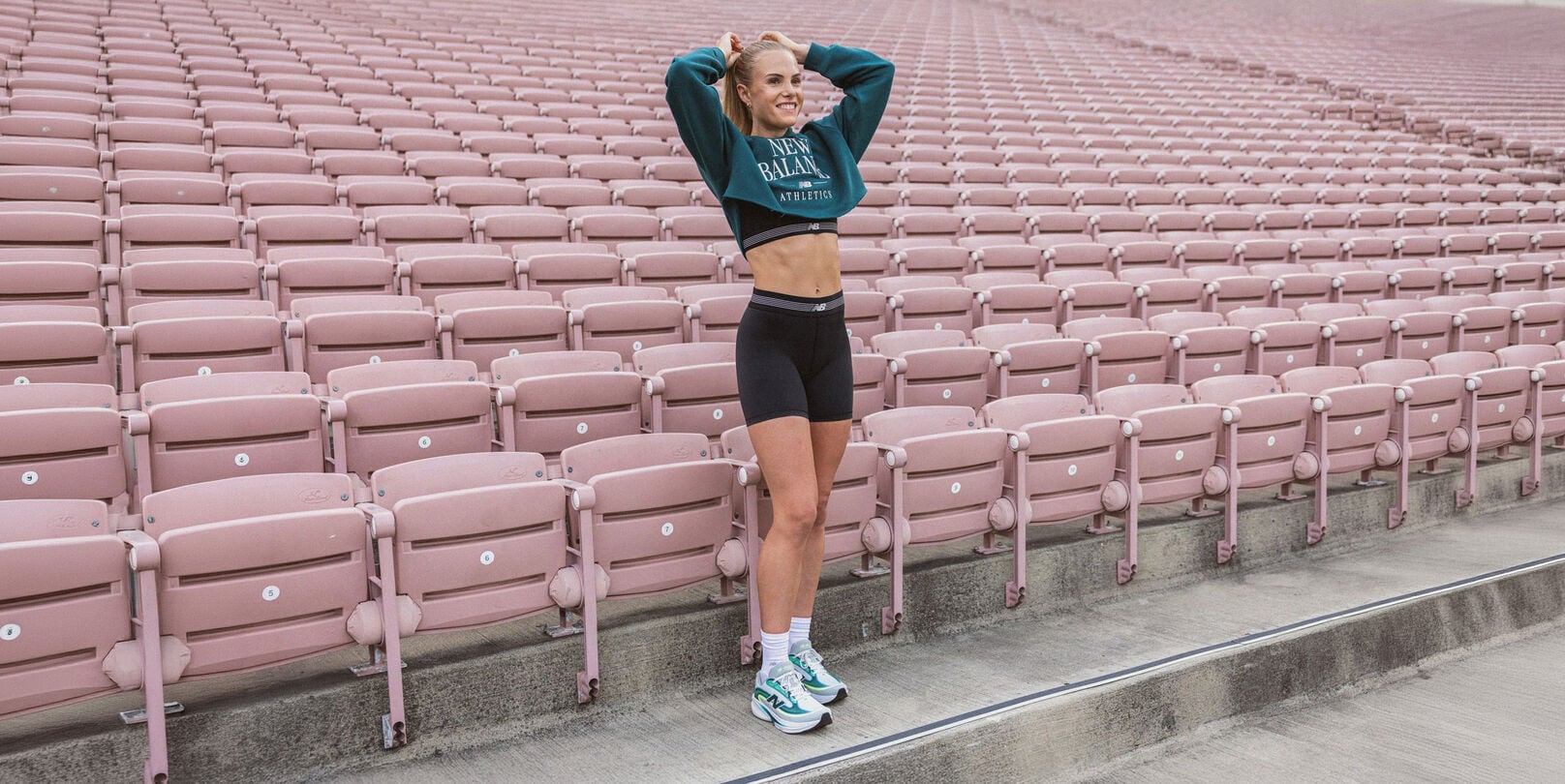
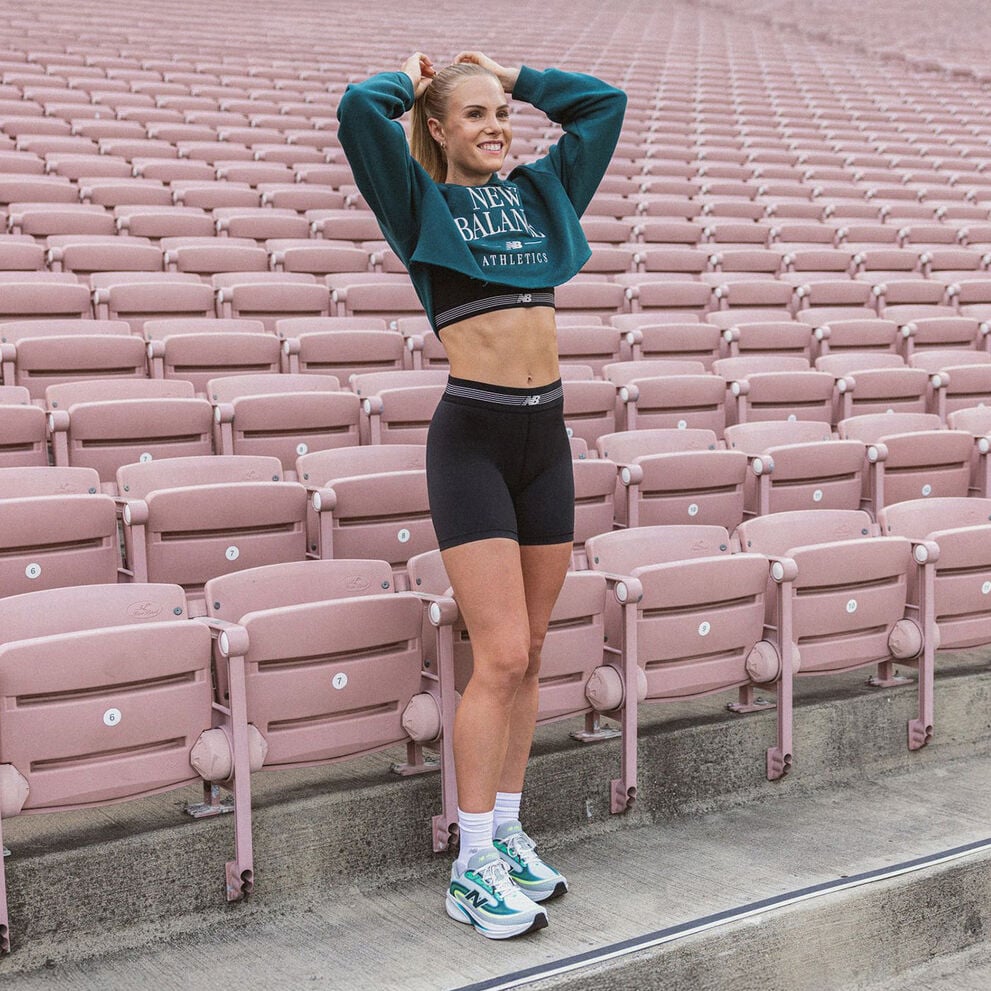
Getting started can be simple: comfortable running shoes, clothing that moves with you and a realistic plan for getting out the door consistently.
For most beginners, the essentials are simple:
· A comfortable pair of running shoes for everyday miles
· Moisture-wicking shorts, tights
· A supportive sports bra, if needed
· Lightweight layers for changing weather
· A basic run-walk plan for beginners
· Enough room in your schedule to make running repeatable
As your running routine develops, you can explore additional gear based on the workouts, conditions and features that matter most to you. For now, focus on making the next run feel doable.


How should beginners choose running shoes and gear?
What running shoes should a beginner wear?
For a first running shoe, comfort and versatility matter most. A daily trainer works well for easy runs, short runs, run-walk sessions and gradually building miles.
The New Balance Ellipse features Fresh Foam X cushioning; an 8 mm heel-to-toe drop and an approximate weight of 273 g/9.6 oz (one shoe, size 7W or 9.5M). Its soft, neutral cushioning makes it a practical choice for easy miles and repeated run-walk transitions. Due to variances created during the development and manufacturing processes, all references to drop heights are approximate.
Once running becomes more familiar, some runners choose to add a lighter, more responsive shoe for workouts where they want a different feel. The New Balance FuelCell Rebel v5 weighs approximately 223 g/7.9 oz (one shoe, size 7W or 9.5M) has a 6 mm heel-to-toe drop and features FuelCell cushioning. It can be an option once you have a routine and want to begin incorporating quicker efforts. Due to variances created during the development and manufacturing processes, all references to drop heights are approximate.
How do the featured New Balance products compare?
| Product | Good for | Key details |
| New Balance Ellipse | Easy runs, run-walk sessions and building consistency | Fresh Foam X cushioning; 8 mm drop; approx. 273 g/9.6 oz (one shoe, 7W or 9.5M). Due to variances created during the development and manufacturing processes, all references to drop heights are approximate. |
| New Balance FuelCell Rebel v5 | Quicker efforts once a regular running routine is established | FuelCell cushioning; 6 mm drop; approx. 223 g/7.9 oz (one shoe, 7W or 9.5M). Due to variances created during the development and manufacturing processes, all references to drop heights are approximate. |
| RC Essential Short | Everyday training runs | NB DRY fast-drying technology that wicks moisture away from your body; four-way stretch fabric; built-in brief; external back zippered pocket; two internal drop-in pockets |
| RC Bra | Running and higher-movement workouts | Full support for high-bounce activities; NB DRY fast-drying technology that wicks moisture away from your body; built-in padding with encapsulation; NB Sleek 4-way stretch fabric |
| RC Pocket Legging (Women’s) | Cooler-weather runs, high-intensity workouts and layering | NB DRY fast-drying technology that wicks moisture away from your body; NB Sleek 4-way stretch fabric; side drop-in pockets; internal infinity drawcord; reflective details at bottom hem |
| RC Pocket Tight (Men’s) | Cooler-weather runs, high-intensity workouts and layering | NB DRY fast-drying technology that wicks moisture away from your body; NB Sleek 4-way stretch fabric; side drop-in pockets plus back zip pocket; external drawcord; functional ankle zippers; reflective NB logo |
| RC Jacket | Wind, light rain and changing conditions | Nylon ripstop body; water resistant coating for light rain resistance; packable hood; zippered hand pockets |
Do I need multiple pairs of running shoes as a beginner?
Many beginners start with one versatile daily trainer, while others enjoy having different shoes for different types of runs. The New Balance Ellipse can handle everyday training, while the FuelCell Rebel v5 offers a lighter, more energetic feel for quicker sessions. As your routine grows, you may find that a second option with a different feel makes sense for the way you train.
Why can starting a running routine feel so hard?
Because you're building two things at once: fitness and a habit.
Early runs may feel physically unfamiliar, but the bigger challenge is often making running fit into real life. Work runs late. The weather changes. The couch becomes persuasive.
That is why consistency matters more than making every session impressive.
Research on health-related habit formation suggests habits often take around two months or longer to begin feeling automatic. A 2024 review of 20 studies found median habit-formation times of 59 to 66 days, with substantial individual variation.[1]
For a new runner, an awkward first month does not mean running is not for you. It may simply mean everything still requires thought.
Remove decisions where you can. Choose running days in advance. Put clothes somewhere visible. Run from the same place. The easier it is to begin, the less motivation has to do all the work.
How can beginners use the run-walk method?
What is the run-walk method?
The run-walk method alternates running with planned walking breaks, giving beginners a way to manage effort while getting used to time on their feet.
Walking during a run is not a sign that you have failed at running. It is part of the plan.
How can I start with run-walk intervals?
Keep the first version simple: alternate a short period of easy running with a planned walking break, then repeat.
The ratio is not the goal. The point is to manage effort well enough to finish and want to come back. As running feels more comfortable, lengthen the running portions while keeping walk breaks available.
When should I transition from run-walk intervals to continuous running?
Move toward continuous running when it starts to feel like the natural next step, not because you think walking no longer counts. Some runners eventually prefer continuous running. Others continue using planned walking breaks as part of training. Your running does not have to look like someone else's to count.
What should I wear for my first runs?
Wear clothing that lets you move comfortably and manage sweat. Technical running apparel is designed to do that with less distraction.
For warmer runs, the RC Essential Short uses four-way stretch fabric, a built-in brief, NB DRY fast-drying technology that wicks moisture from your body, and pockets for essentials. The NB RC Bra is designed for full support during high-bounce activities like running. For cooler conditions, the RC Pocket Tight offers NB DRY fast-drying technology that wicks moisture from your body and NB Sleek four-way stretch fabric.
You do not need a complicated outfit. You do want clothes you mostly forget about once you start running.
Why do runners usually choose technical fabrics instead of cotton?
Cotton absorbs moisture and can stay wet as you run. Technical running fabrics are designed to manage moisture more effectively, helping clothing feel lighter as you warm up and sweat.
You can build your running wardrobe over time. Pay attention to what feels comfortable and what becomes distracting, such as soaked fabric, shifting shorts or seams that rub, then look for gear that addresses those needs.
How do I dress for running in cold weather or rainy conditions?
Think in layers. Lightweight layers give you more flexibility than one heavy piece once your body warms up.
The RC Jacket is a lightweight layer with a nylon ripstop body, water resistant coating for light rain resistance, zippered hand pockets and a packable hood. Pair it with moisture-managing base layers or tights when conditions call for more coverage.
And when conditions are not safe for running, change the plan. Consistency includes knowing when not to force it.
How can a running group help beginners stay consistent?
A running group gives your routine something a solo plan cannot: other people expecting you to show up. That can matter when running is new.
Groups can provide structure, shared routes, encouragement and the reassurance that runners come in more paces, experience levels and body types than you may have imagined.
Are running clubs welcoming to complete beginners?
Many are, but ask before your first run. Look for beginner sessions, no-drop runs, multiple pace groups or run-walk options. A good group should make starting feel easier.
What should I bring to my first group run?
Keep it simple. Wear comfortable running shoes and weather-appropriate clothing. Bring water if needed, and check the distance, route and expected pace before you arrive.
Then bring one useful beginner accessory: willingness to say you are new. Ask where the group starts, which pace makes sense and what “no drop” means. Everyone had their first group run. This one is yours.
Start where you are.
Running does not require a dramatic beginning.
You do not need to hit a certain pace. You do not need to run the whole time. You do not need to look like you have done this before.
Start with comfortable gear. Keep the effort manageable. Walk when you need to. Find people who make running more enjoyable. Then come back and do it again.
1. Singh, B., Murphy, A., Maher, C., & Smith, A. E. (2024). Time to Form a Habit: A Systematic Review and Meta-Analysis of Health Behaviour Habit Formation and Its Determinants. Healthcare, 12(23), 2488. https://doi.org/10.3390/healthcare12232488
